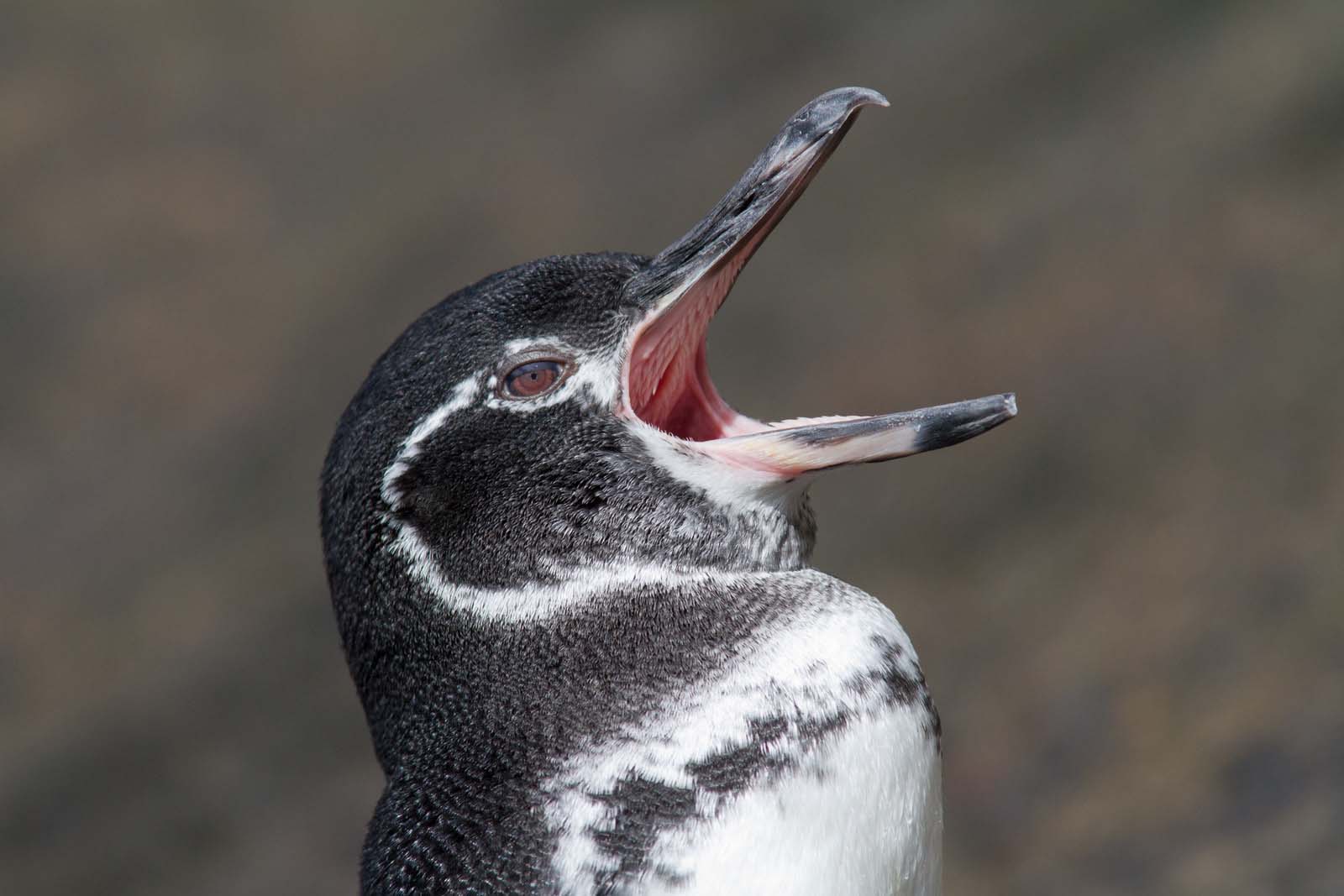
Galapagos Conservancy supports research on Galapagos penguins as part of its efforts to better understand this species and give us better tools for conserving it. These collaborations resulted in a publication entitled Penguins at the Equator, published by the Center for Ecosystem Sentinels. It was also published by the Galapagos National Park Directorate and the Global Penguin Society.
According to Dr. Jorge Carrion (Conservation Director at Galapagos Conservancy) and Conservando Galapagos Foundation penguins are particularly sensitive to changes in the environment. Penguins are considered sentinel species. This means that they can provide timely and valuable information to help determine if there have been ecological changes in their ecosystems. It is therefore important to consider its conservation priority and research.
The publication emphasizes several important aspects, including the fact that it is difficult to determine the population size of Galapagos Penguins because they spend so much time searching for food at sea. They hide in lava tunnels while searching for food when they’re on land. Because juvenile penguins are also present, it is possible to determine if they have successfully raised their chicks in lava tunnels. The population of juvenile penguins was less than 1% in 2015/16 during El Nino (the warming of the waters) and more than half of it during La Nina (the drop in water temperatures). To determine the health and physical condition of the penguins, scientists took measurements. To track penguins, some were given small numbers of stainless steel tags placed between their left leg claws.
Since 2000, the IUCN Red List of Endangered Species has listed the Galapagos Penguin as an endangered species. This is due to its small distribution and population size. A 2009 population census revealed that the number of Galapagos Penguins worldwide was between 1,800 and 4,700. The research also revealed that the most serious threats to Galapagos Penguins include climate change, oil contamination, plastic waste, nylon nets that can catch penguins, introduced mosquitoes and invasive species like rats, cats and dogs.
Galapagos Conservancy must continue to collaborate on conservation of this species according to Carrion. This is not only because it is endangered and under threat, but also because of its ecological value and importance, which makes it an important bioindicator.